
Excavation and Grading for Water Retention
Pond Building in Livingston for properties requiring excavation, earthmoving, and soil placement to create functional water features
Building a pond requires excavating soil to the depth and shape needed for water retention, grading slopes to prevent erosion, and placing compacted dirt around the perimeter to form berms or spillways. CG DirtWorxs LLC prepares pond sites in Livingston by handling the earthmoving, grading, and soil placement phases of construction. The service addresses properties with low areas that collect runoff, livestock operations needing water sources, or landowners who want recreational ponds. East Texas clay soil provides natural sealing properties when properly compacted, reducing the need for liners in many pond builds.
Pond site preparation involves stripping vegetation, excavating to the planned depth, shaping the basin floor and walls to specified slopes, and using excavated soil to build berms or dam structures. Grading equipment creates the contours that determine water depth, shoreline access, and drainage overflow routes.
Schedule a property evaluation to review topography, drainage patterns, and soil suitability for pond excavation.
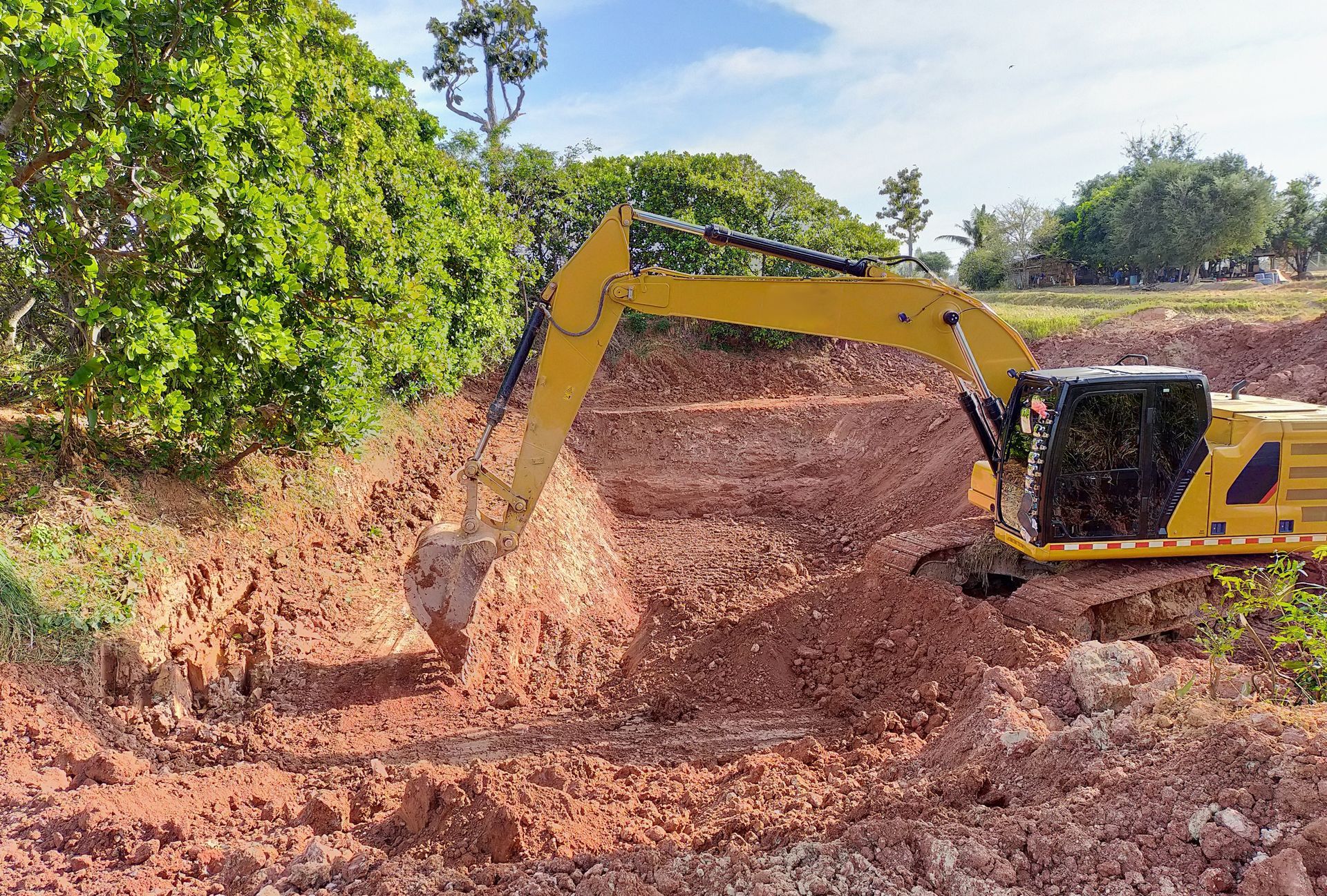
What Pond Site Preparation Includes
The work starts with staking the pond outline and identifying where excavated soil will be placed for berms or fill. Excavators dig the basin to depths that match the planned water volume, typically ranging from shallow edges for livestock access to deeper centers that hold water year-round. Soil removed from the basin gets used to construct berms on the downhill side or spread across nearby low areas. Compacting clay soil in the basin floor and along berms helps prevent seepage and ensures the pond holds water once filled.
Once excavation and grading finish, the pond site shows a defined basin with sloped walls, a compacted floor, and berms or dam structures in place where needed. The graded slopes prevent erosion when water fills the pond, and the compacted clay reduces water loss through seepage. Overflow pathways direct excess water away from the dam to prevent washouts during heavy rain.
Pond building does not include installing liners, stocking fish, or constructing spillway pipes—it focuses on the earthmoving and grading needed to create the water-holding structure. Soil type, water table depth, and drainage patterns determine whether additional sealing or engineering is required after excavation..
Questions Before Starting Your Project
Landowners planning ponds often ask about soil suitability, water sources, and how excavation affects the surrounding property.
What soil conditions work best for pond construction in Livingston?
Clay soil compacts well and provides natural sealing, reducing seepage compared to sandy soil, which often requires liners or additional clay imported to the basin floor.
How is the excavated dirt used during pond building?
Soil removed from the basin typically builds berms on the downhill side to form a dam or gets spread on-site to fill low areas, eliminating the need to haul material off the property.
What determines pond depth and size?
Planned water volume, intended use (livestock watering, fishing, irrigation), and the property's topography determine how deep and wide the excavation needs to be.
When should pond excavation happen relative to rainfall?
Dry conditions allow equipment to move soil without creating mud, so pond work in East Texas often schedules for late summer or early fall when soil moisture is lower.
What happens after excavation is complete?
The pond basin fills naturally from rainfall and runoff or through well water if a faster fill is needed, and the compacted soil settles as water saturates the basin.
CG DirtWorxs LLC excavates and grades pond sites for properties where topography and soil support water retention. Contact the team to review your property's drainage and discuss excavation requirements for your planned pond size.