
Utility Lines Installed Below Frost Depth
Trenching Services in Livingston for properties requiring underground line preparation for water, electric, and drainage systems
Underground utilities fail when trenches are dug too shallow, backfilled improperly, or routed through unstable soil that shifts and damages pipes or conduit. CG DirtWorxs LLC provides trenching services in Livingston for water lines, electrical conduit, drainage pipes, and utility connections where accurate depth and width prevent future line breaks or settling that disrupts service. Operators dig narrow trenches to specified depths using trackhoes or trenching machines, then backfill around installed lines with compacted material that protects pipes from surface loads.
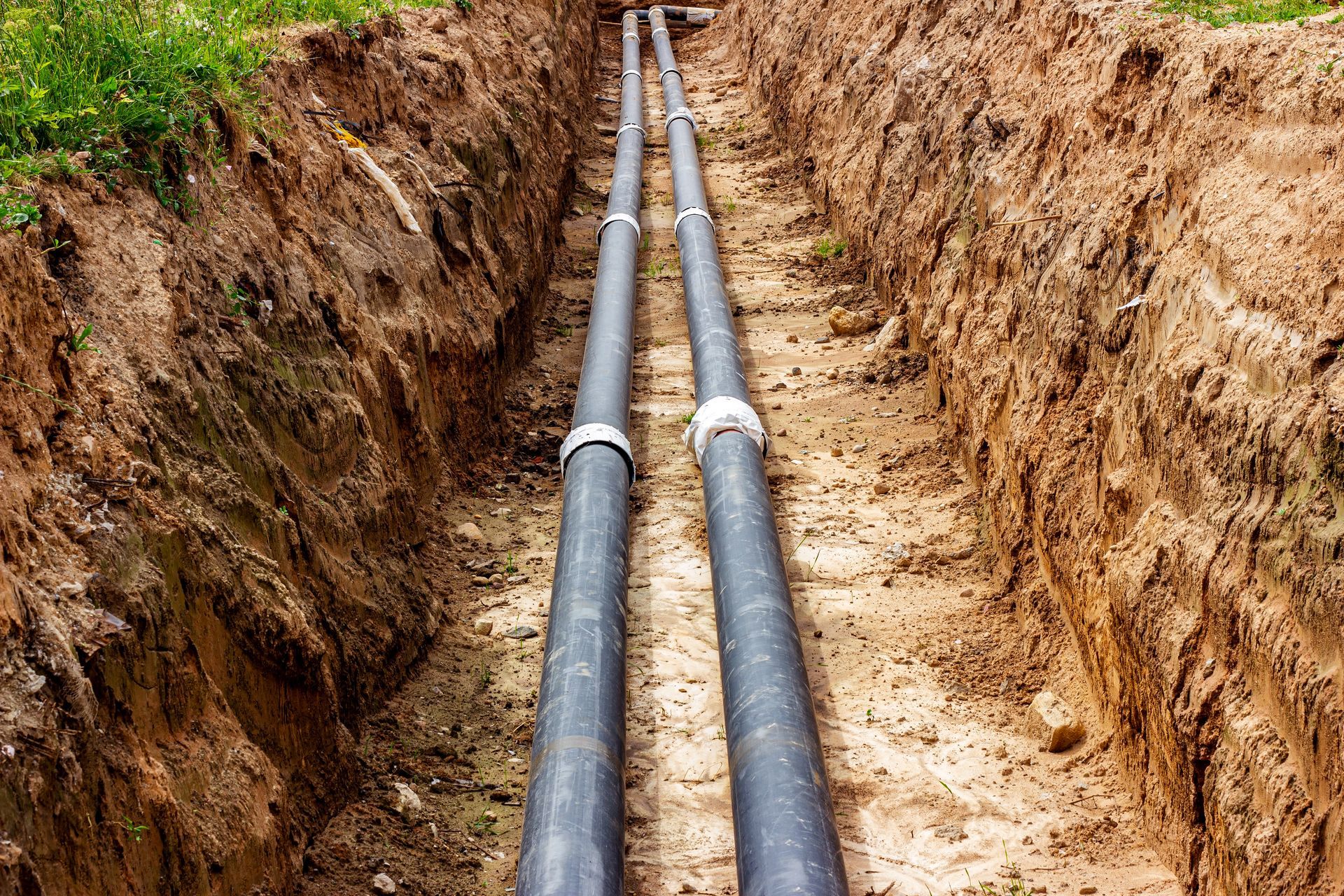
Trenching involves cutting a continuous channel through soil to the depth and slope required for the utility being installed, whether that means maintaining consistent grade for gravity drainage or reaching depths that protect water lines from freezing. Excavated soil gets placed alongside the trench for backfill once pipes or conduit are laid and inspected. The process accounts for underground obstacles, existing utilities, and soil conditions that affect trench stability.
Schedule a site assessment to map trench routes and identify existing utility locations before digging begins..
What Changes After Trenching Completes
The work starts with utility locates to mark existing underground lines, followed by layout stakes that define the trench path and depth requirements. Equipment digs the trench to width specifications that allow workers to position and connect pipes without standing directly against unstable trench walls, which is a critical safety consideration in deeper excavations. Clay soils common in East Texas hold trench walls more reliably than sandy soils, but both conditions require attention to slope and shoring based on depth and moisture content.
After trenching and backfill are complete, you see a filled channel where the trench was dug, with surface soil slightly mounded to account for future settling. Underground lines sit at the correct depth with compacted material surrounding them, protected from surface traffic and environmental exposure. Your property has functional utility connections without exposed pipes or lines vulnerable to damage from equipment, weather, or shifting ground.
Trenching services include excavation and backfill but do not cover pipe installation, utility connections, or line testing, which are handled by plumbers, electricians, or utility contractors once trenches are ready. Trench depths vary based on line type, frost protection requirements, and local code specifications..
What Property Owners Usually Ask
Clients planning utility installations frequently want to know about trench dimensions, backfill methods, and how routes get determined across their property.
What depth do utility trenches require?
Water lines typically need trenches between eighteen and thirty-six inches deep depending on frost line considerations, while electrical conduit depths are specified by code and drainage lines follow slopes calculated from elevation surveys.
How does backfill protect installed lines?
Soil gets placed in layers around pipes and compacted to eliminate voids, which prevents settling that could stress connections and ensures surface loads transfer around the line rather than directly onto it.
When should trenching happen relative to other site work?
Trenching occurs after rough grading establishes property elevations but before final surfaces like driveways or landscaping go in, so utility lines are in place without needing to cut through finished work later.
Why do trench routes sometimes follow indirect paths?
Operators route trenches to avoid tree roots, existing utilities, and underground obstacles while maintaining required slopes for drainage lines, which may result in curves rather than straight lines across your lot in Livingston.
What equipment works best for different trench types?
Narrow trenching machines cut clean channels for single utility lines, while trackhoes dig wider trenches needed for multiple lines or larger diameter pipes that require more working space during installation.
CG DirtWorxs LLC digs trenches for utility installations across residential and commercial sites in East Texas, coordinating with contractors to ensure lines get placed correctly. Request an evaluation to plan trench routes and review depth requirements for your project.