
Ground Ready for What You're Building
Site Preparation in Livingston for properties requiring grading, clearing, and excavation before construction begins
CG DirtWorxs LLC handles site preparation in Livingston and surrounding East Texas areas, working with property owners who need land graded, cleared, and excavated before construction or development starts. The service addresses uneven terrain, vegetation that blocks access, and soil that needs removal or redistribution. You get a construction-ready site with proper drainage pathways, compacted surfaces where foundations or driveways will sit, and all vegetation and debris removed from the work zone.
Site preparation involves removing trees, stumps, and brush from the footprint, excavating soil to reach the grade required by your plans, and redistributing dirt to create level building pads or sloped drainage routes. East Texas clay soil often requires additional compaction and moisture management during grading to prevent settling under structures. The process also includes defining site access routes so equipment can move materials without damaging areas designated for landscaping or utilities.
Schedule a property evaluation to identify grading requirements and soil conditions specific to your construction timeline..
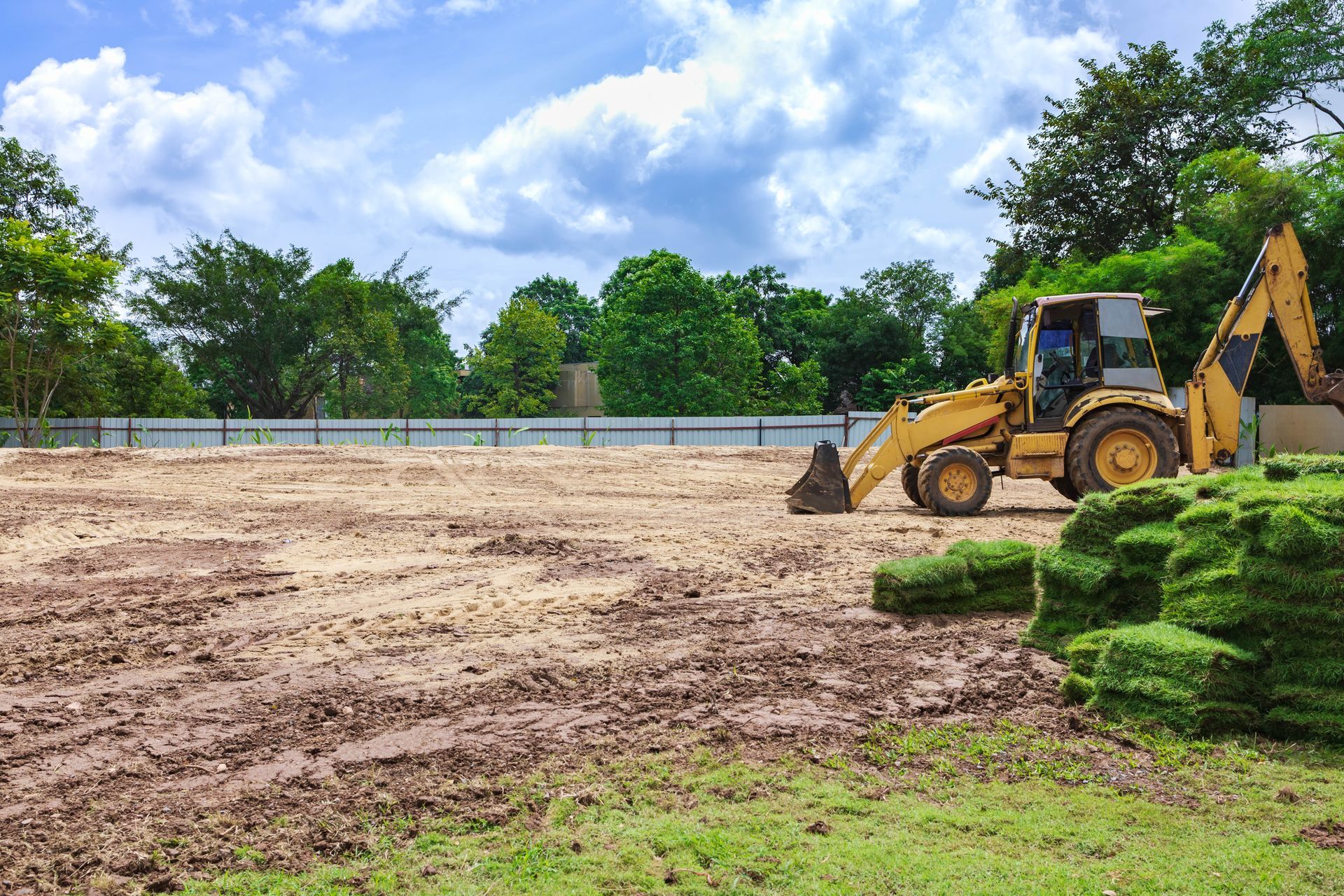
What Proper Grading and Clearing Require
The work begins with marking utility lines and property boundaries, then clearing vegetation from areas designated for buildings, driveways, or drainage features. Excavation removes soil to depths specified in construction plans, and grading equipment redistributes that soil to create slopes that direct water away from foundations. Compaction equipment presses soil layers in building zones to reduce the risk of future settling.
Once grading and excavation finish, you notice the site has defined elevations, clear access paths for concrete trucks or framing crews, and no standing water in areas where structures will sit. Slopes direct runoff toward drainage routes rather than pooling near foundation lines. The building pad sits level and firm enough to support the weight of framing materials and equipment without creating ruts or soft spots.
Site preparation does not include pouring concrete, installing utilities, or final landscaping—it creates the foundation-ready surface that those trades require. The scope depends on soil type, the amount of elevation change needed, and whether excavated material stays on-site for fill or gets hauled away.
What Property Owners Usually Ask
Questions about site preparation often focus on timing, soil handling, and what the finished grade should look like before construction crews arrive.
What happens to the soil removed during excavation?
Excavated soil can be redistributed on-site to build up low areas or create berms, or it can be hauled away if the property lacks space for fill placement or if the soil quality does not support reuse.
How does East Texas clay affect grading work?
Clay soil in the Livingston area holds moisture longer than sandy soil, which means grading schedules often depend on recent rainfall to avoid working with mud that cannot be properly compacted or shaped.
What does a construction-ready site look like?
The building pad sits level within the tolerances your construction plans specify, drainage slopes direct water away from the foundation area, and all vegetation and debris have been cleared from zones where equipment and materials will sit.
When should site preparation happen relative to other construction tasks?
Site work typically finishes before concrete crews arrive, so the ground is stable and graded to the elevations required for slabs, footings, or piers.
What equipment is used for grading and clearing?
Excavators remove soil and vegetation, bulldozers redistribute dirt and create slopes, and compaction equipment firms up building pads and access routes to prevent settling under load.
CG DirtWorxs LLC works with property owners and contractors who need sites prepared to construction specifications. Request a consultation to review your grading plan and schedule earthmoving around your project timeline.